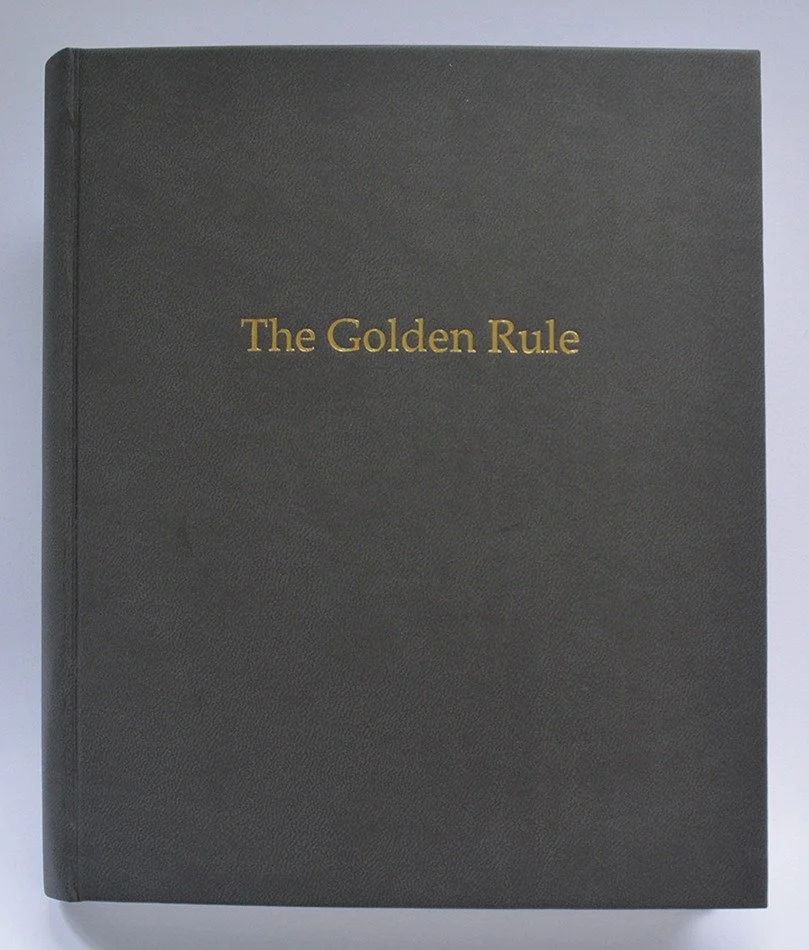
Ines von Ketelhodt, “Alpha Beta”
Artist Statement
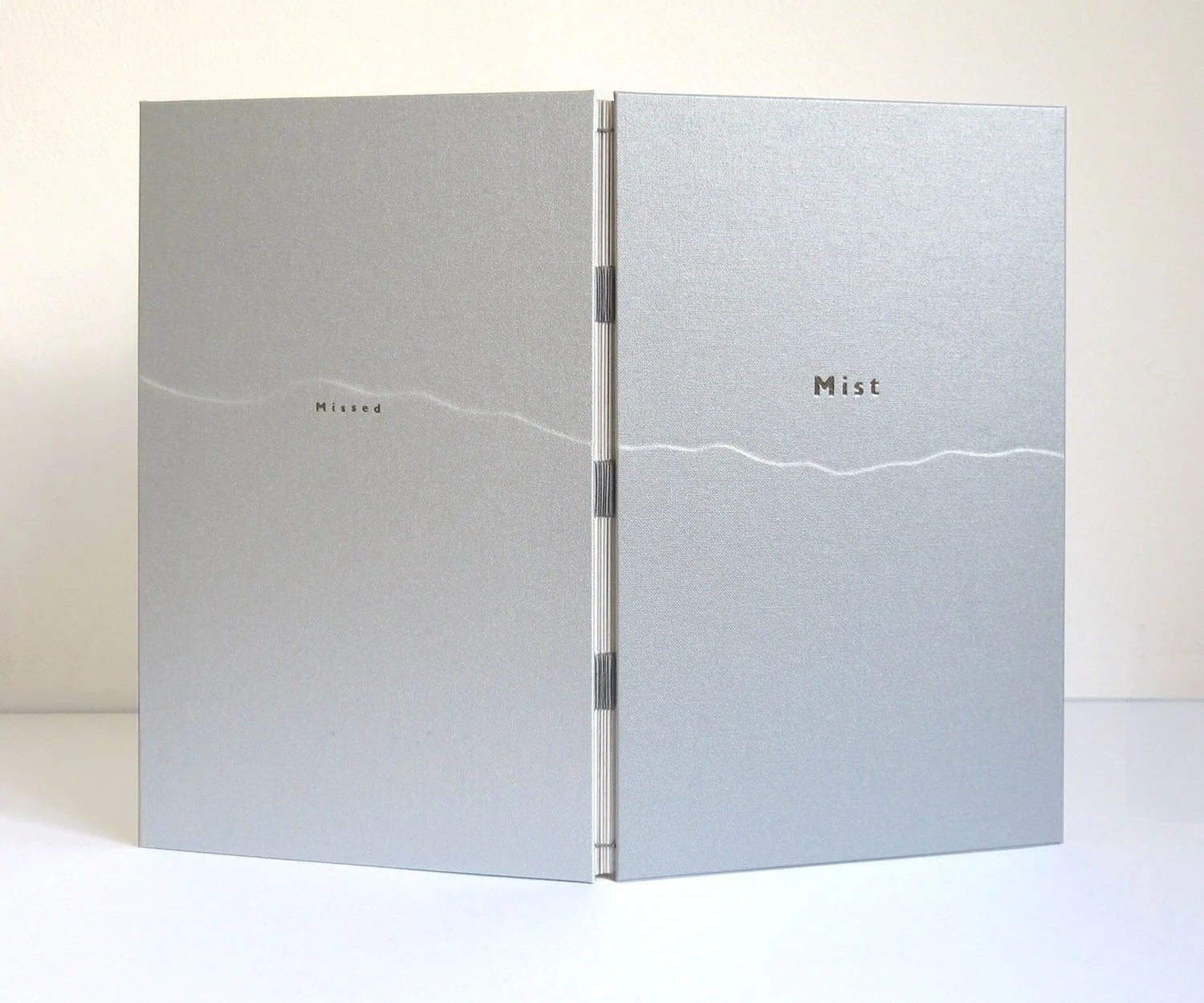
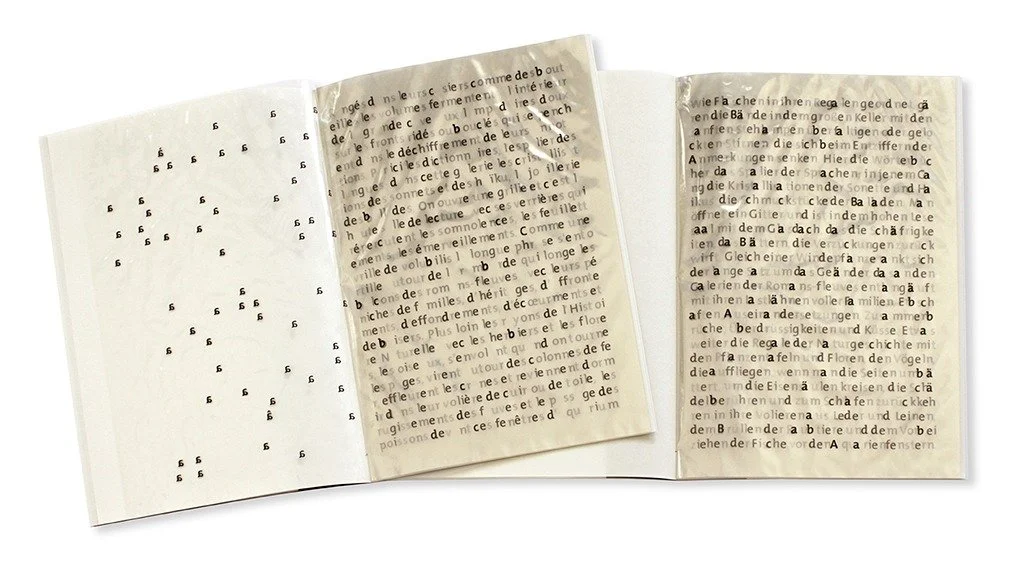
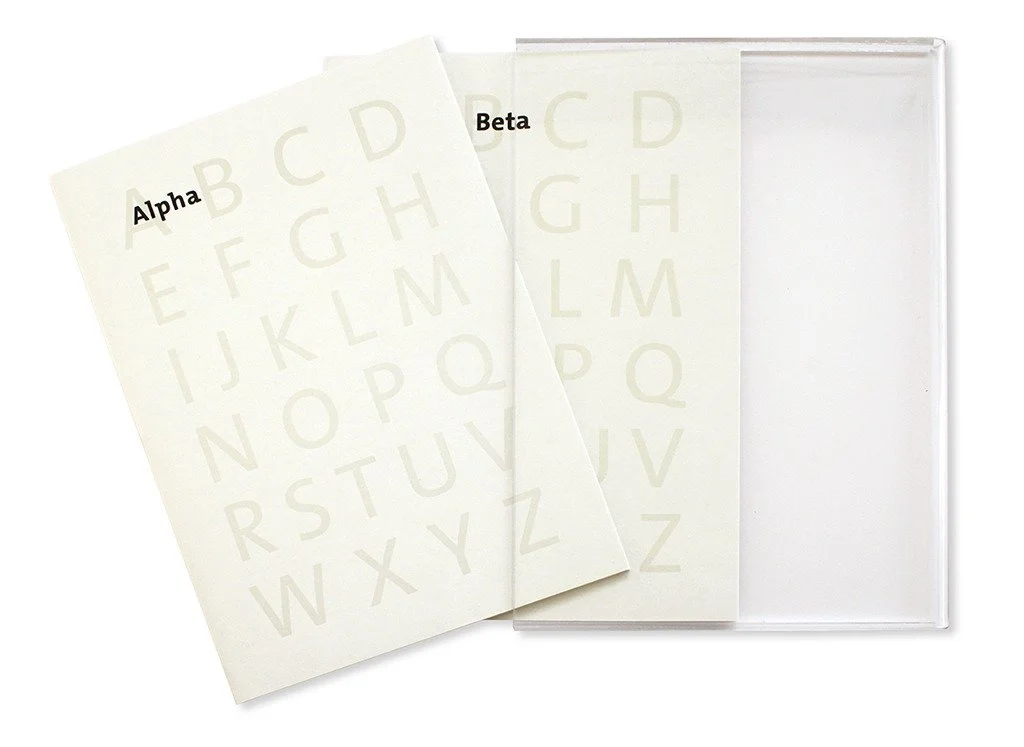
The two volumes contain a text passage by Michel Butor that describes a portrait of a universal library. The “Alpha” volume contains the original French text, “Itinéraire – Les Bibliothèques,” and the “Beta” volume features a German translation, “Reiserouten – Die Bibliotheken”
(Itineraries – The Libraries).
“Arranged like bottles on their shelves, the volumes age in the large cellar, soft lamps hovering over creased or ringleted foreheads lowered in their attempts to decipher the comments. Here are the dictionaries, the espaliers of languages; in that aisle over there, the crystalline sonnets and haikus, the gemlike ballads. Opening a grating, you find yourself in a lofty reading room with a glass ceiling that reflects back the drowsiness, the leafing, the ecstasies. Like a climbing plant, the long sentence twines around the railing that runs along the galleries of the Romans-fleuves with their barges full of families, inheritances, conflicts, collapses, wearinesses and kisses. A bit farther on: the natural history shelves with their plant posters and flora;the birds that fly upward when you turn the pages and circle around the iron columns, touch their skulls and then return to their leather and linen aviaries to sleep; the beasts of prey roaring and the fish gliding by the aquarium windows.”
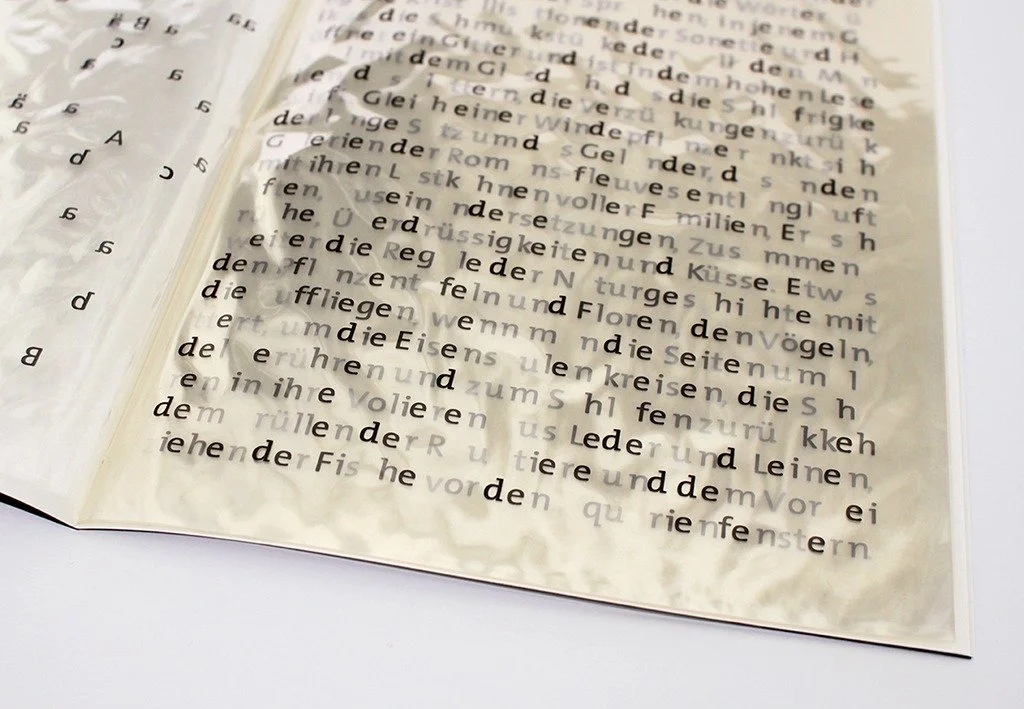
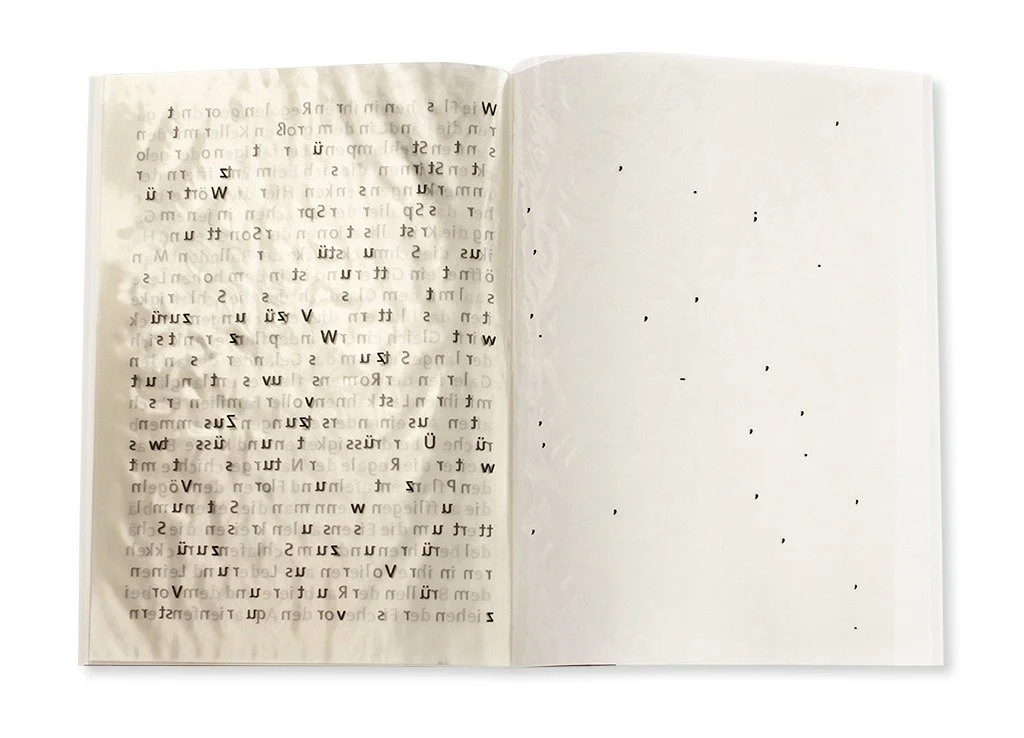
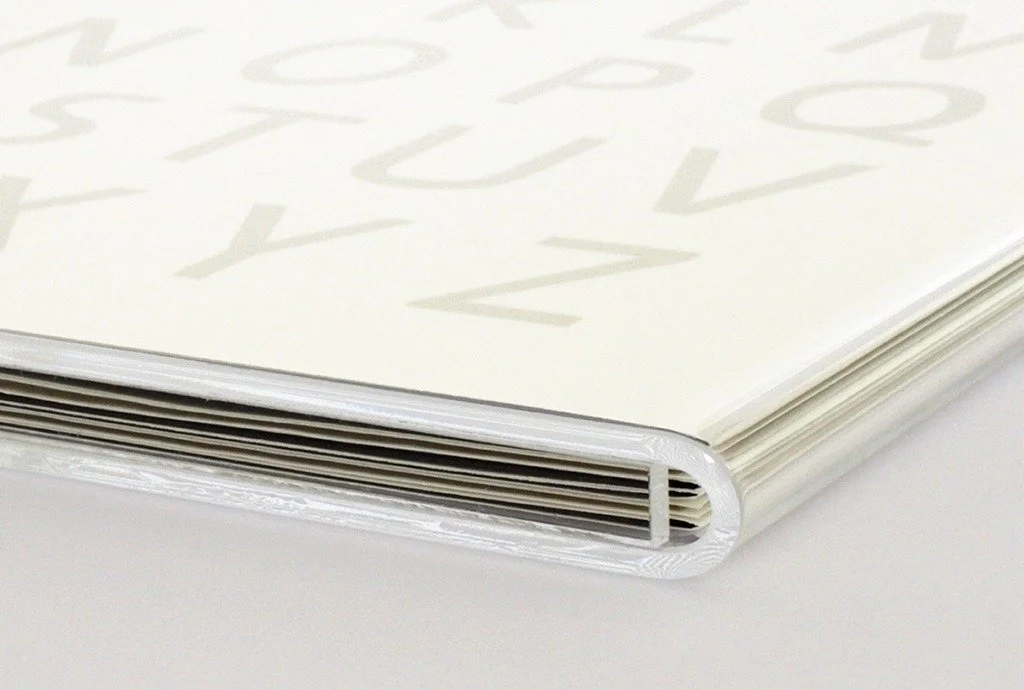
The text could fit onto a single page of each volume, but instead, it is broken down into its letter components. In the spirit of Jorge Luis Borges’ “Library of Babel,” which he describes as a universal library containing every imaginable book, each of the 26 letters that make up the text is printed separately on its own page in each volume. All of the A/a letters are printed on the first page, all of the B/b letters on the second, etc., with each letter in the same position it would have on a complete printed page. Because of the transparency of the cellophane pages, the entire text can only be read on the first page. On the other hand, the raw material of the separated 26 letters could theoretically be used to create every other possible text.
Another aspect of this book project is the possibility of comparing two languages to one another. If both volumes are paged through at the same time, the reader can compare how frequently various letters appear in the respective languages.
Ines von KetelhodtFlörsheim, Germany
Alpha Beta
2017
Letterpress printed from polymer plates and cellophane paper (40 g/qm)
35 copies
Two volumes, each with 48 pages
10.94 x 15.55 x 0.12 in
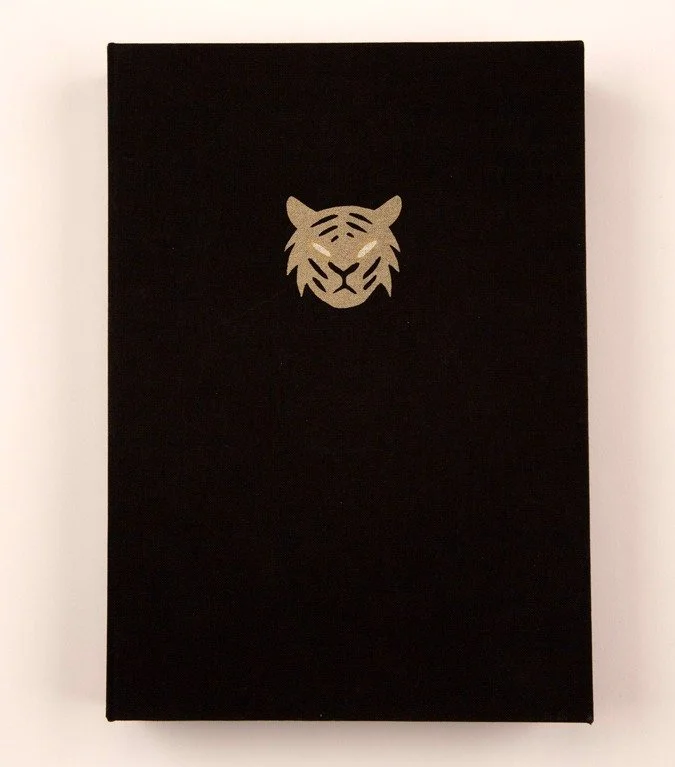
(Slipcase) 11.26 x 7.99 x 0.55 in
See More 2017 MCBA Prize Entries